Samosa
History
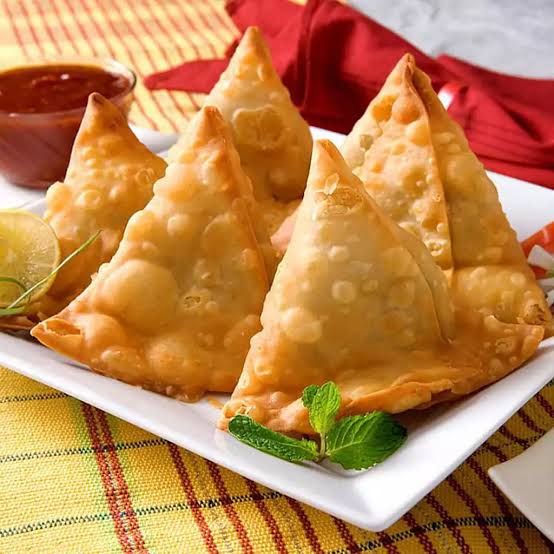
Samosas originated in the Middle East and Central Asia before being introduced to India by traders. The word "samosa" comes from the Persian word "sanbosag" meaning triangular pastry.
In India, samosas evolved into the popular snack we know today, with potato and pea fillings. They're now enjoyed throughout South Asia and have become a global favorite.
Ingredients
For the Dough
- 2 cups all-purpose flour
- 1/4 tsp salt
- 2 tbsp ghee or oil
- Water as needed
For the Filling
- 3 potatoes, boiled and mashed
- 1/2 cup green peas
- 1 onion, finely chopped
- 2 green chilies, chopped
- 1 tsp ginger-garlic paste
- 1 tsp cumin powder
- 1/2 tsp garam masala
- 1/2 tsp amchur (dry mango powder)
- Salt to taste
- Fresh cilantro
Cooking Utensils
Instructions
Make Dough
Mix flour, salt, and ghee. Add water gradually to make stiff dough. Cover and rest for 30 minutes.
Prepare Filling
Heat oil, sauté onions, ginger-garlic paste, and green chilies. Add mashed potatoes and spices.
Add Peas
Add green peas and cook for 2-3 minutes. Add cilantro and let cool completely.
Divide Dough
Divide dough into 8 equal balls. Roll each ball into oval shape (6 inches long).
Cut and Fold
Cut oval in half. Form cone by joining straight edges. Seal with water.
Fill Samosas
Fill cones with potato mixture. Don't overfill. Seal open edges by folding.
Heat Oil
Heat oil to medium heat (350°F). Test with small piece of dough.
Fry Samosas
Fry samosas until golden brown on both sides. Drain on paper towels.
Serve
Serve hot with tamarind chutney, mint chutney, or ketchup.
Video Tutorial
Pro Tips
Dough Consistency
Keep dough stiff and not too soft for crispy samosas.
Oil Temperature
Maintain medium heat. Too hot makes samosas burn, too low makes them oily.
Proper Sealing
Seal edges well to prevent filling from leaking during frying.